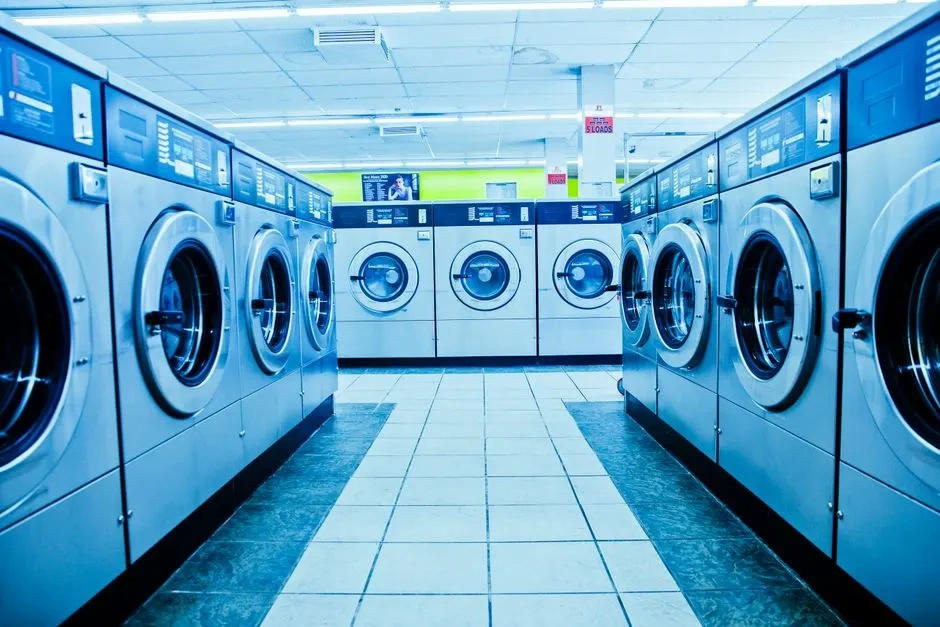
A washer error code is the machine telling you where it stopped. F5E1 means a lid or door switch fault, F9E1 means the washer is taking too long to drain, IE means water is not coming in, OE means water is not draining, and UE means the load is unbalanced. Write the code down, then work through the checks below.
This guide covers the six codes California callers quote most, grouped by brand, because the same letters can mean different things on different machines. Most checks take a few minutes and need no tools.
What does a washer error code actually tell you?
An error code is the washer's own diagnosis. When the control board detects a step that is not completing — water not arriving, water not leaving, a door that will not lock, a load that will not balance — it stops the cycle and shows a code instead of guessing. That code narrows the fault to one system, which is why a technician always asks for it first.
- Write the code down before you reset anything. Note the exact letters and numbers, and the brand and model number from the label inside the door or on the back of the machine. A photo of the display works too.
- The same letters can mean different things. DC means a door fault on most Samsung top-load models, but an unbalanced load on some Samsung front-load models. F9E1 is a Whirlpool and Maytag code only — an LG washer will never show it.
- A reset clears the display, not the fault. Unplugging the machine for a few minutes can clear a stuck control state, but if the underlying fault is still there, the code comes back as soon as the machine reaches the same step again.
- Codes vary by model. Use this guide as a starting point, and check the manual for your exact model when a code does not match what you see here.
Unplug the machine before you open any panel or reach inside it, and never bypass the lid or door switch to watch the machine run with the lid open — the switch is there because moving parts inside can injure fingers. If water is leaking near an outlet, switch the power off at the breaker first.
F5 and F9E1 — Whirlpool and Maytag washers
Whirlpool and Maytag washers share the same platform — every Maytag washer sold since 2006 is built on a Whirlpool platform — so their codes match. They print as an F number, an E number, or both together, so F5E1 and F5 E1 are the same code.
- F5E1 — lid or door switch fault. The control detected the lid or door switch open while the door was locked, or the lid was open when start was pushed. Check that nothing — a sleeve, a towel, a laundry item — is blocking the switch or the latch, then close the lid firmly and listen for the click. If the lid feels loose on its hinge or there is no click, the switch is not closing and the machine will not start or spin.
- F9E1 — long drain. The washer tried to drain but the water level did not drop within the allowed time, usually four to eight minutes. A normal drain takes less than two minutes. The usual causes are a kinked or blocked drain hose, a clogged pump filter, too many suds, or a standpipe that is too high. On front-load models, clean the pump filter behind the small access door at the bottom front — have a towel ready, because water will come out. On top-load models the pump sits at the base of the cabinet, so check the hose first.
The same family has two more codes worth knowing: F5E2 means the lid lock cannot engage, and F5E3 means the lock cannot release — both are usually a failed lock assembly, which is technician work. F9E1 can also appear as Ld or drn on models with word-code displays. If your washer will not start at all, start with our washer won't start checks, and if it will not drain, see our guide to a washer that won't drain.
IE, OE and UE — LG washers
LG washers use two-letter codes. The three callers quote most are all water or load problems, and two of them have a safe check you can do in minutes.
- IE — inlet error. The washer is not receiving enough water within the expected time, usually about four minutes. Check that both taps are fully open, the inlet hose is not kinked or blocked, and the mesh filter where the hose meets the machine is not clogged with sediment. Low household water pressure can cause this too, so if the taps and filters are clear, check whether other taps in the house are also slow.
- OE — outlet error. The washer cannot drain the water within the expected time, usually five to eight minutes. The most common cause is a blocked pump filter: open the small flap at the bottom front, unscrew the filter, and clear out lint, coins, hair ties and small garment items. Then check the drain hose for kinks or blockages, and make sure the hose is not positioned too high or sitting in standing water.
- UE — unbalance error. The load has shifted to one side of the drum and the washer cannot spin safely, so it stops to protect itself. Pause the cycle, open the door, and spread the wet laundry evenly around the drum. Washing a single heavy item like a blanket or a bedsheet without anything to balance it is the most common cause.
On some LG top-load models, a lowercase uE means the machine is still trying to rebalance the load on its own — it may add water and try the spin again. An uppercase UE means it could not correct the imbalance and needs your help. If UE keeps coming back with normal, balanced loads, the suspension springs or shock absorbers have worn out and the drum can no longer correct itself — that needs a technician.
DC and UE — Samsung washers
Samsung washers use information codes, and the two callers quote most are a door fault and an unbalanced load. Note that newer Samsung machines end their codes in C, while older ones used E for the identical fault — 4C and 4E are the same water-supply fault, for example — so go by the number if the letter does not match a chart.
- DC — door error. The washer cannot confirm the door or lid is closed and locked, so it refuses to fill or spin. Open the door and close it again firmly. Look for a sleeve, a sock, or a corner of a duvet caught in the latch or the rubber gasket, and check that the latch is securely fixed. If the code stays with the door plainly shut, the latch assembly or a dropped hinge is the fault.
- UE — unbalanced load. The washer tried to spin, the weight sat on one side of the drum, and it stopped rather than wobble itself across the floor. Pause the cycle, redistribute the laundry evenly, and restart. A single heavy item is the usual trigger, so add two or three towels to give the drum something to balance against. Check the machine sits level — if it rocks when you push a corner, adjust the feet until it sits solid.
One warning: on some Samsung front-load models, DC means an unbalanced load during spin, not a door fault, so check the manual for your model number before you order a latch. If the machine vibrates violently before showing UE, or UE returns on a balanced load, the suspension rods or shock absorbers have worn out. See also our guide to a washer that won't spin.
What safe checks can I try before calling a technician?
Work through these checks in order. Most codes clear at one of the first four steps, and the order matters — there is no point cleaning a filter if the door is not shut.
- Write the code down. Note the exact letters and numbers, the brand, and the model number. This is what a technician will ask for first.
- Power cycle the machine. Unplug it, or switch it off at the breaker, for one to five minutes, then restore power and try a short cycle. This clears a stuck control state. If the code comes straight back, the cause is still there.
- Check the door or lid. Open it and close it firmly, and check nothing is caught in the seal or the latch. Listen for the click as it shuts — no click usually means the switch is not closing.
- Redistribute the load. Spread wet laundry evenly around the drum. Take out a single heavy item, or add a couple of towels to balance it. Check the machine does not rock when you push a corner.
- Check the water supply. For an IE or fill code, make sure both taps are fully open, the inlet hoses are not kinked, and the mesh filters where the hoses meet the machine are clean.
- Check the drain. For an OE or F9E1 code, clean the pump filter on front-load models, straighten the drain hose, and check the standpipe is not too high and the hose is not sitting in standing water.
- Check the suds. Too much detergent can cause oversuds, which slows draining and can trigger a drain code. Run a rinse cycle with no detergent, and use less next time.
- Try a different cycle. Run the machine on a gentle cycle, then on a normal one, and note when the code appears — while filling, while draining, or during spin. When it appears tells a technician which system is at fault.
If the code comes back after these checks, the fault is in a part — a valve, a pump, a lock assembly, or the suspension — and testing those means removing panels and working around live power and water. That is technician work.
When should I call a technician?
Call a technician when the safe checks above do not clear the code, or straight away if you see any of these:
- A burning smell, scorch marks, or a melted plug or outlet — unplug the machine and do not use it again until it is checked.
- Water leaking near an outlet or the power cord — switch the power off at the breaker first, then mop up.
- The door will not lock even though it is plainly shut — the latch assembly or the lock has failed.
- The pump runs or buzzes but no water moves — the pump or the drain path is blocked or has failed.
- UE keeps coming back with normal, balanced loads — the suspension rods or shock absorbers have worn out.
- The same code returns after every power cycle — the control is detecting a real fault, not a stuck state.
When you call, have four details ready: the brand and model number, the exact code on the display, when the code appears — while filling, draining, or spinning — and what you have already checked. Those four things often tell a technician whether the visit is a simple part swap or a bigger fault. We give a written quote before work starts, so you know the cost before anything is taken apart.
Frequently Asked Questions
What does F9E1 mean on my washer?
F9E1 is a Whirlpool and Maytag code for a long drain: the washer tried to drain but the water level did not drop in time. Check the drain hose for kinks, clean the pump filter on front-load models, and check the standpipe height. A normal drain takes less than two minutes.
What does IE mean on an LG washer?
IE is an LG inlet error: the washer is not receiving enough water within the expected time. Check that both taps are fully open, the inlet hose is not kinked, and the mesh filter where the hose meets the machine is not clogged with sediment.
What does UE mean and how do I fix it?
UE means the load is unbalanced and the washer cannot spin safely. Pause the cycle, open the door, and spread the wet laundry evenly around the drum. A single heavy item like a blanket is the most common cause. If UE keeps coming back with normal loads, the suspension needs inspection.
Why does my washer keep showing the same code after I reset it?
A reset only clears the display; it does not fix the cause, so the code comes back as soon as the machine reaches the same step again. Write the code down, work through the checks for that code, and if it still returns, the fault is in a part that needs a technician.
Do error codes mean the same thing on every washer?
No. The same letters can mean different things by brand and model — DC means a door fault on most Samsung top-load models but an unbalanced load on some Samsung front-load models, and F9E1 is a Whirlpool and Maytag code only. Always check the manual for your exact model number.