Why Is My Washer Shaking and Off Balance?
A washer that shakes and walks across the floor is almost never a mystery. Here are the real causes, the fixes, and when to call a pro.
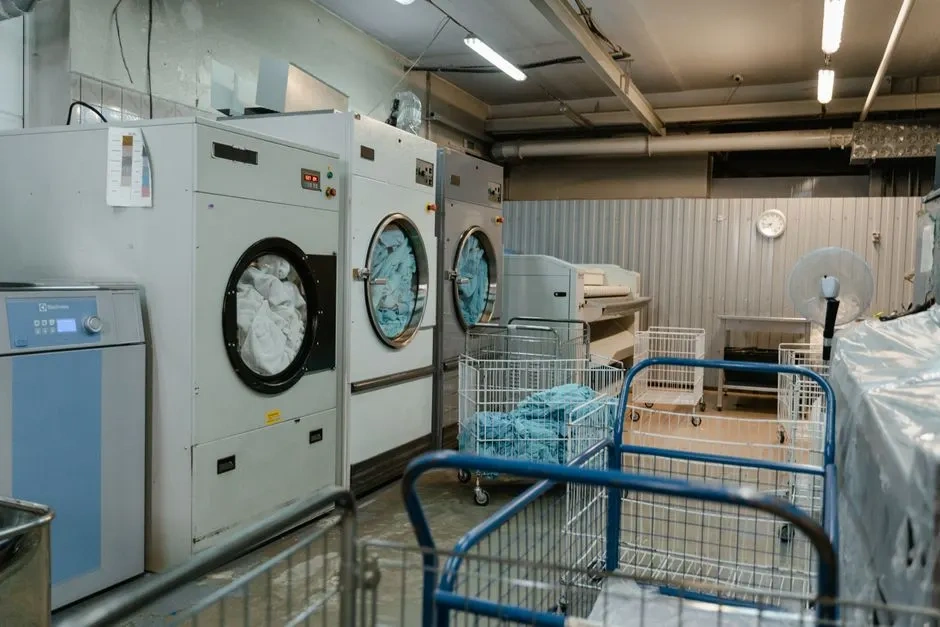
Your washer is shaking and off balance because the load inside the drum is not distributed evenly, or because a mechanical part that holds the drum steady has failed. In many cases, the cause is one of two things: an unbalanced load the machine cannot correct on its own, or worn suspension rods and dampers that let the drum swing freely during the spin cycle. The rest of this post walks through every cause we actually find in the field, the troubleshooting you can do yourself in about 20 minutes, and the point where a shaking washer stops being a nuisance and starts being a repair bill.
Prices mentioned in this guide are market ranges, not our own fixed prices. Work is quote-based only — call us for a written quote before work starts.
The short answer: what actually makes a washer shake
Why is my washer shaking and off balance is a question about physics, not luck. A washer drum spins at 800 to 1,400 RPM on most modern machines. At that speed, even a few ounces of weight sitting on one side of the drum turns into pounds of force pushing the cabinet sideways. The machine is designed to absorb that force through springs, dampers, and a level frame. When any one of those three gives out, the whole cabinet starts to move.
Unbalanced washer fix work is a process of elimination, and it always starts with the cheapest variable: the load. A single heavy towel wrapped around a bedsheet will throw a drum off balance every time, even on a machine that is mechanically perfect.
If you want the broader picture of what we handle across the region, our Washer Repair in California service covers everything from a five-minute load adjustment to a full suspension rebuild.
Why is my washer shaking so much? The six causes we find most
Washer shaking causes fall into six buckets, and they are ranked below from most common to least. We diagnose them in this order because it saves you money - there is no reason to pull a drum apart before you have checked the feet.
1. An unbalanced or overloaded drum
This is the number one cause, and it is free to fix. A load that is too small (one pair of jeans) or too large (a comforter stuffed into a 4.2 cubic foot drum) cannot distribute itself evenly. The washer tries to correct by adding water and re-spinning, and if it fails three times, most machines throw an unbalanced code and stop.
2. The washer is not level
A washer needs all four feet planted on the floor with no rocking. Push the top corner of the cabinet diagonally - if it moves, the machine is rocking and every spin will amplify that movement. Most washers have adjustable front legs you can turn by hand, and a 2-foot level across the top takes about 60 seconds to check.
3. Shipping bolts still installed
We see this more than you would think, especially on machines bought from a big-box store and installed by the homeowner. Front loaders ship with four bolts locking the drum to the cabinet. If they were never removed, the drum cannot float and the machine will pound the floor from day one. They are usually accessed from the back panel.
4. Worn suspension rods or dampers
Top load washers hang the drum from four suspension rods. Front load washers use two or four shock-absorbing dampers at the bottom of the tub. Both wear out. A rod that has lost its spring tension lets the drum drop and bounce, and the symptom is a machine that shakes violently only during the spin cycle. This is the repair we do most often on machines that are 6 to 10 years old.
5. A failing tub bearing or worn drum spider
On front loaders, the bearing that supports the drum shaft sits behind the outer tub. When it fails, you get a low grinding rumble on top of the shaking, and often a rust streak running down the inside of the cabinet. This is a bigger job - the tub usually has to come out - and on a machine over 12 years old it is often the point where replacement makes more sense than repair.
6. A foreign object trapped between the drums
Coins, bra wires, and small socks slip past the inner drum and rattle around the outer tub. The result is a banging or scraping sound that gets worse at high speed. If the noise is metallic and rhythmic, this is the first thing we check.
Washing machine off balance troubleshooting you can do in 20 minutes
Washing machine off balance troubleshooting starts with the load and works outward. Do these steps in order and stop when the shaking stops - most people never get past step three.
- Stop the cycle and open the lid or door. Wait for the drum to stop completely before you reach in.
- Redistribute the load. Pull everything out, then put it back loosely. Do not pack it down. Mixed sizes work better than one heavy item.
- Remove one or two items if the drum is more than three-quarters full. A drum packed to the top has nowhere for the load to move.
- Check the level. Put a level on top of the cabinet front-to-back and side-to-side. Adjust the front feet until the bubble is centered.
- Rock the machine. Push diagonally on the top corners. Any movement means a foot is off the floor.
- Run a rinse and spin cycle with no clothes. If it still shakes empty, the problem is mechanical, not the load.
If the empty spin is smooth, you have solved it. If the empty spin still walks the machine across the floor, you are looking at suspension, dampers, or a bearing - and that is where a technician earns their keep.
Front load vs top load: the shaking is not the same problem
Front load washer shaking during spin California homeowners describe almost always points to dampers or a bearing, because front loaders have no suspension rods to wear out. The drum is held by two or four friction dampers at the base of the outer tub, and when those lose their resistance, the tub slams against the cabinet on every spin.
Top loaders are the opposite. They hang from four rods with springs at the top, and the failure mode is a drum that sags and bounces. You can often see it by pushing down on the drum from above - a healthy drum springs back once and stops. A worn one bounces two or three times.
One more difference: front loaders are far more sensitive to being off level, because the drum axis is horizontal. A top loader can tolerate a small tilt. A front loader cannot.
Washer walking across floor: when the machine becomes a hazard
Washer walking across floor is the stage where the problem stops being annoying and starts being expensive. A machine that moves 6 to 12 inches per cycle is pulling on the fill hoses, the drain hose, and the power cord. We have seen supply hoses chafe through and flood a laundry room, and we have seen drain hoses pull out of the standpipe mid-spin.
If your washer is moving, stop running it until you have checked the level and the load. If both are fine and it still walks, the suspension is gone and every cycle is doing more damage to the cabinet, the floor, and the hoses.
In the older hillside neighborhoods we serve - places like Washer Repair in Studio City where a lot of homes have sloped laundry room floors and original 1950s subfloors - walking is more common because the machine was never truly level to begin with. A 1-inch slope across a 27-inch footprint is enough to send a washer drifting toward the wall.
What to watch out for: mistakes that turn a small fix into a big one
The most expensive mistake we see is running a shaking washer for months because it only does it on big loads. Every violent spin stretches the suspension further and stresses the tub mounting points. What started as a $180 set of suspension rods becomes a tub replacement or a new machine.
Other things to avoid:
- Do not shim the washer with wood, cardboard, or rubber mats. Shims hide the symptom and put uneven stress on the frame. Adjust the feet instead.
- Do not ignore a grinding noise. Grinding plus shaking means a bearing, and bearings do not heal.
- Do not overload to save a cycle. A drum filled past three-quarters is the single fastest way to wear out suspension parts.
- Do not keep running a machine that has thrown an unbalanced code three times. It is telling you something is wrong beyond the load.
Typical market pricing in this area runs $150 to $280 for suspension rods or dampers installed, and a market $400 to $700 for a tub bearing job on a front loader. A load-balance and leveling visit is usually the minimum service call, and we credit that toward the repair if parts are needed.
When to call a professional
Call a professional when the washer still shakes on an empty spin cycle, when you hear grinding or banging, or when the machine has moved far enough to stress the hoses. Those three symptoms point to parts you cannot safely replace from the outside of the cabinet.
Our technicians carry suspension rods, dampers, and leveling hardware on the truck for the most common models, so most shaking repairs are done in a single visit. We also handle the related failures that show up alongside a shaking washer - a Washer Not Spinning repair in California is often the same diagnosis from a different angle, because a drum that cannot balance will not complete a spin.
If your machine is leaking while it shakes, that is a separate problem and worth reading up on before we arrive. A Washer Leaking repair in California usually traces back to a door boot, a drain hose, or an overfilled tub from too much detergent.
Most often it is an unbalanced load or a machine that is not level. If the washer still shakes on an empty spin, the cause is mechanical - worn suspension rods on a top loader, or failed dampers on a front loader.
Stop the cycle, redistribute the load loosely, and check the level with a 2-foot level across the top. Adjust the front feet until the machine stops rocking. If it still shakes empty, the suspension needs replacing, which takes a technician 45 to 90 minutes.
Four things cause nearly all shaking: an unbalanced load, an unlevel floor, shipping bolts left in a new front loader, and worn suspension rods or dampers. A failing tub bearing is the fifth cause and usually comes with a grinding noise.
Yes, in almost every case. Suspension rods and dampers are replaceable parts, and most common repairs run a market $150-$400, quote-based only, with a written quote before work starts. The only time we recommend replacement over repair is a failed tub bearing on a machine older than 12 years.
Because the spin cycle is the only time the drum rotates fast enough to amplify an imbalance. At 800 to 1,400 RPM, a small weight difference becomes a large force. Wash and rinse cycles turn too slowly to expose the problem.